November 10, 2025
mins read
Should You Build or Buy AI Agents for Your Finance Team?
Share with others


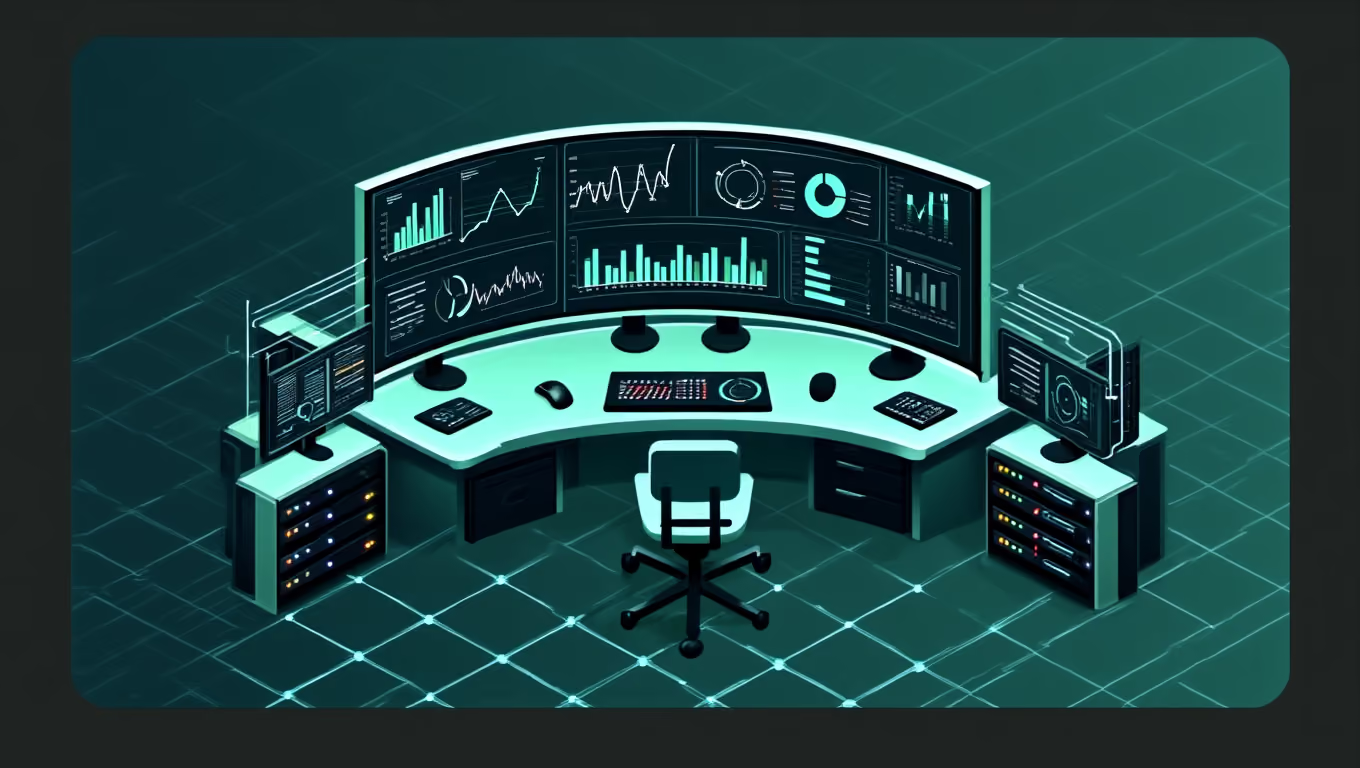



A finance team at a mid-sized company decided to build internal Coupa automation. The logic made sense: they had good engineers who were available to handle the project, and they'd be able to get it done quickly. Six months and $200K later, they're still fighting edge cases. A Coupa UI update broke the login flow and had to be patched, then Stripe released a breaking change to a key API and they're pulling developers back in the automation code. The engineering resources that should be building product features are stuck debugging portal integrations.
This pattern repeats across companies of all sizes. Teams don’t completely understand what they're signing up for when they build finance automation in-house. Whether you should build or buy automation depends on understanding total cost of ownership and having a framework that separates strategic investments from operational necessities.
Most teams budget for the build phase when evaluating finance automation—3 months of engineering time, maybe some DevOps support. You’re typically considering engineering salaries, cloud infrastructure, maybe some tooling costs. But Gartner's TCO research found that 80% of total IT costs occur after initial deployment. That means that if you spend $200K building finance automation, you're actually committing to a $1M+ lifecycle cost - with the majority coming after you’ve shipped.
Total cost of ownership (TCO) accounts for everything beyond the build: ongoing maintenance, infrastructure scaling, staff time spent firefighting broken integrations, opportunity cost of engineering resources tied up in non-strategic work. IEEE research and decades of academic study consistently show that maintenance consumes 60-70% of total software lifecycle costs. For a browser agent that took a few months to build, you also have to budget for weeks of engineering time annually just to maintain it.
TCO is a solid framework for understanding the costs of a project in its entirety. Now we’ll shift attention to a decision-making framework to understand strategic value. What capabilities justify long-term engineering commitment? For finance software, we recommend following an 80/20 rule: buy capabilities that fall outside your core expertise, and build high leverage tools that enhance your competitive position.
The 80% "buy" category typically includes:
The 20% "build" category includes:
We find that most finance automation falls in the 80%. Logging into Coupa to extract invoice data doesn’t differentiate your business any more than an off the shelf solution would—neither does sending payment reminders through Stripe or reconciling cash receipts to NetSuite. These are table-stakes operations. Every company does them. Specialized vendors handle these better through economies of scale and focused expertise.
The exceptions come when your process is genuinely unique—so specialized that no vendor addresses it. This is uncommon, and even more so with the flexibility provided by modern techniques like agentic AI. Most companies follow similar procurement workflows for AP. Most businesses run standard invoice-to-cash cycles, payment reminders, and collections escalation patterns for AR. But these cases are rare. For most organizations, automating Coupa logins or Stripe dunning is an operational improvement. That doesn’t mean it’s not worth doing, but it’s likely not worth doing yourself.
The build-versus-buy decision comes down to specific trade-offs across control, cost, expertise, and risk. Here's how the two approaches compare:
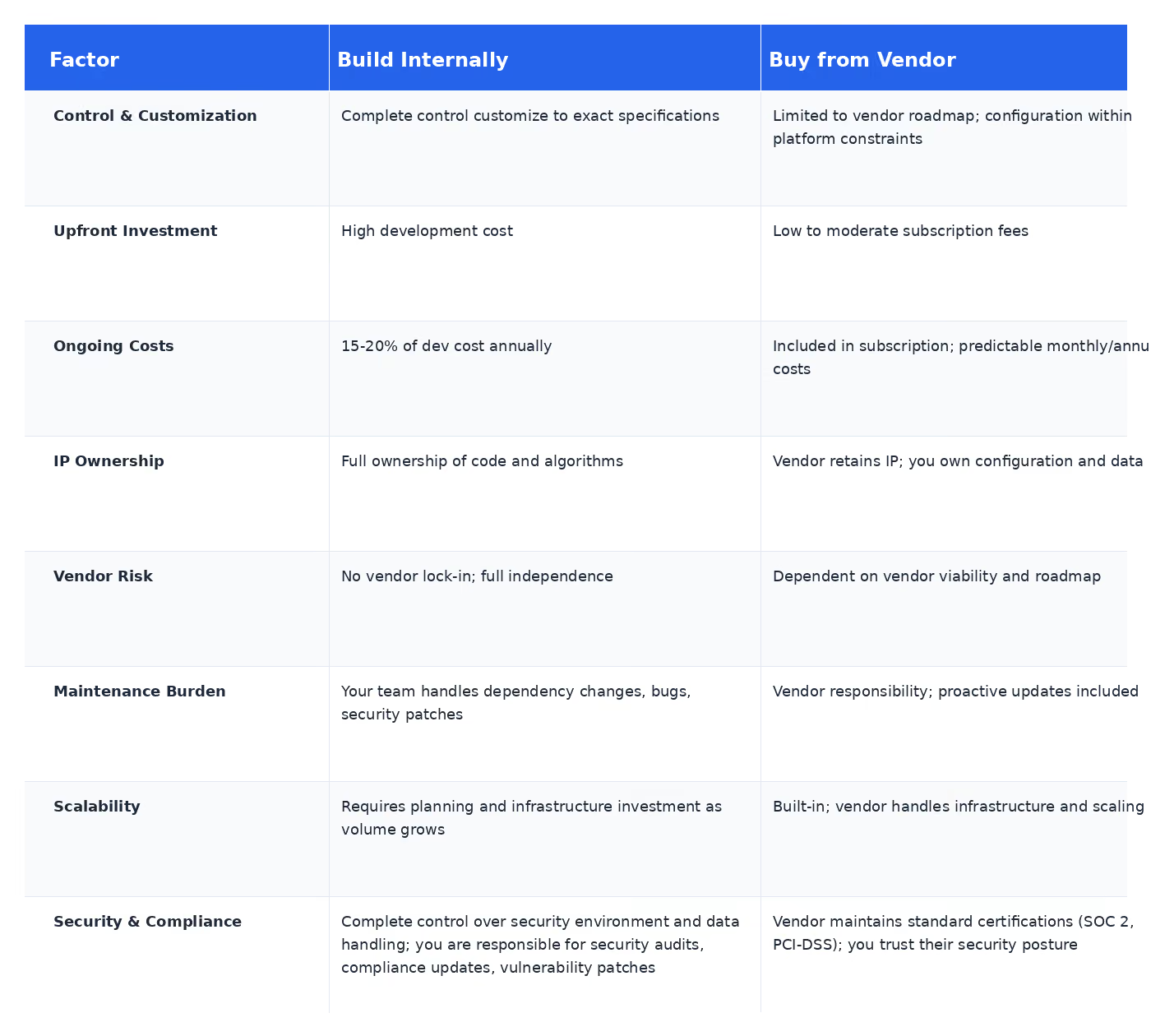
Automation for AP and AR workflows can be built or bought—each approach has clear trade-offs. Building provides complete control and IP ownership but requires sustained engineering investment, with maintenance consuming 60-70% of total lifecycle costs. Buying offers faster deployment and predictable costs but limits customization to vendor capabilities.
The 80/20 framework provides useful guidance for finance automation projects: buy the capabilities that require specialized domain expertise your team shouldn't need to maintain—portal integration, payment gateway connections, collections workflows. Build where you want to develop specialization and where you create larger competitive differentiation. Total cost of ownership extends far beyond initial development—factor in the 15-20% annual maintenance burden, technical debt accumulation, and opportunity cost of engineering time.
For most organizations, whether this automation falls in the strategic 20% or the operational 80% determines the right path forward. Your engineering team's time is finite. Spending it on strategic initiatives that differentiate your business creates more value than maintaining projects outside of your core competencies.
Should I build or buy automation for finance workflows like AP and AR?
Most finance automation falls in the "buy" category—about 80% based on our recommended framework. Build capabilities that create competitive differentiation. Buy proven workflows with established best practices that don't differentiate your business. Logging into Coupa to extract invoice data or sending payment reminders through Stripe are table-stakes operations that specialized vendors handle better through economies of scale. Total cost of ownership extends far beyond initial development. Gartner's research found that 80% of total IT costs occur after initial deployment, meaning a $200K build actually commits you to a $1M+ lifecycle cost. Maintenance consumes 60-70% of total software lifecycle costs, so your engineering team's time is better spent on strategic initiatives that differentiate your business.
What is Total Cost of Ownership (TCO) for finance automation, and why does it matter?
Total cost of ownership accounts for everything beyond the initial build: ongoing maintenance, infrastructure scaling, staff time firefighting broken integrations, and opportunity cost of engineering resources. Most teams budget only for the build phase, but Gartner's research found that 80% of total IT costs occur after deployment. If you spend $200K building finance automation, you're actually committing to a $1M+ lifecycle cost. Maintenance consumes 60-70% of total software lifecycle costs. Developers are stuck fixing your tools when Coupa UI updates break login flows or Stripe releases breaking API changes, instead of building product features that drive revenue.
What does the 80/20 framework mean for automation decisions?
The 80/20 framework separates strategic investments from operational necessities: buy capabilities outside your core expertise (the 80%), build high-leverage tools that enhance competitive position (the 20%). The "buy" category includes proven workflows with established best practices, non-core operations, rapidly evolving technical domains, and solutions where vendor economies of scale create better economics. The "build" category includes core intellectual property, truly unique requirements that no vendor addresses, and strategic capabilities requiring rapid iteration. Most AP and AR workflows fall in the 80%—almost every company follows similar procurement workflows and invoice-to-cash cycles, making these operational improvements worth doing but likely not worth doing yourself.
What are the actual maintenance costs of building finance automation in-house?
Maintenance typically consumes 15-20% of your initial development cost annually, plus significant hidden costs. If you spent $200K building automation, budget $30-40K per year minimum—before major platform changes force expensive rewrites. The real costs come from technical debt, dependency updates breaking functionality, security patches requiring immediate attention, and engineering resources diverted from strategic projects. A mid-sized company spent six months and $200K building Coupa automation, then found themselves fighting edge cases indefinitely as UI updates broke login flows and API changes required constant patches. These aren't one-time fixes—they're ongoing engineering commitments.
What finance automation capabilities should I buy from vendors instead of building?
Buy any automation requiring specialized domain expertise your team shouldn't maintain: portal integration with Coupa or NetSuite, payment gateway connections to Stripe, collections workflows, and invoice-to-cash cycles. These require understanding vendor APIs that change frequently, compliance requirements that evolve constantly, and edge cases discovered across thousands of implementations. Specialized vendors handle these through economies of scale—maintaining integrations full-time, absorbing API change costs across their customer base, and including security updates in subscription fees. Buying offers faster deployment with predictable monthly costs and vendor-managed maintenance, freeing your team to focus on capabilities that actually differentiate your business.
Eliminate manual bottlenecks, resolve aging invoices faster, and empower your team with AI-driven automation that’s designed for enterprise-scale accounts receivable challenges.